Joyntly is a B2B SaaS workplace skills development platform that helps organizations turn assessment insights into real, measurable behavior change. Leaders and employees start with a developmental behavioral assessment grounded in the Big Five framework. Then Joyntly uses behavioral science and algorithms to generate a personalized learning path/action plan tied to business goals. The platform keeps development moving with weekly exercises and reminders, and it provides progress dashboards so learners (and admins) can track growth over time. It also emphasizes confidential learning to encourage honest participation, and positions outcomes as measurable
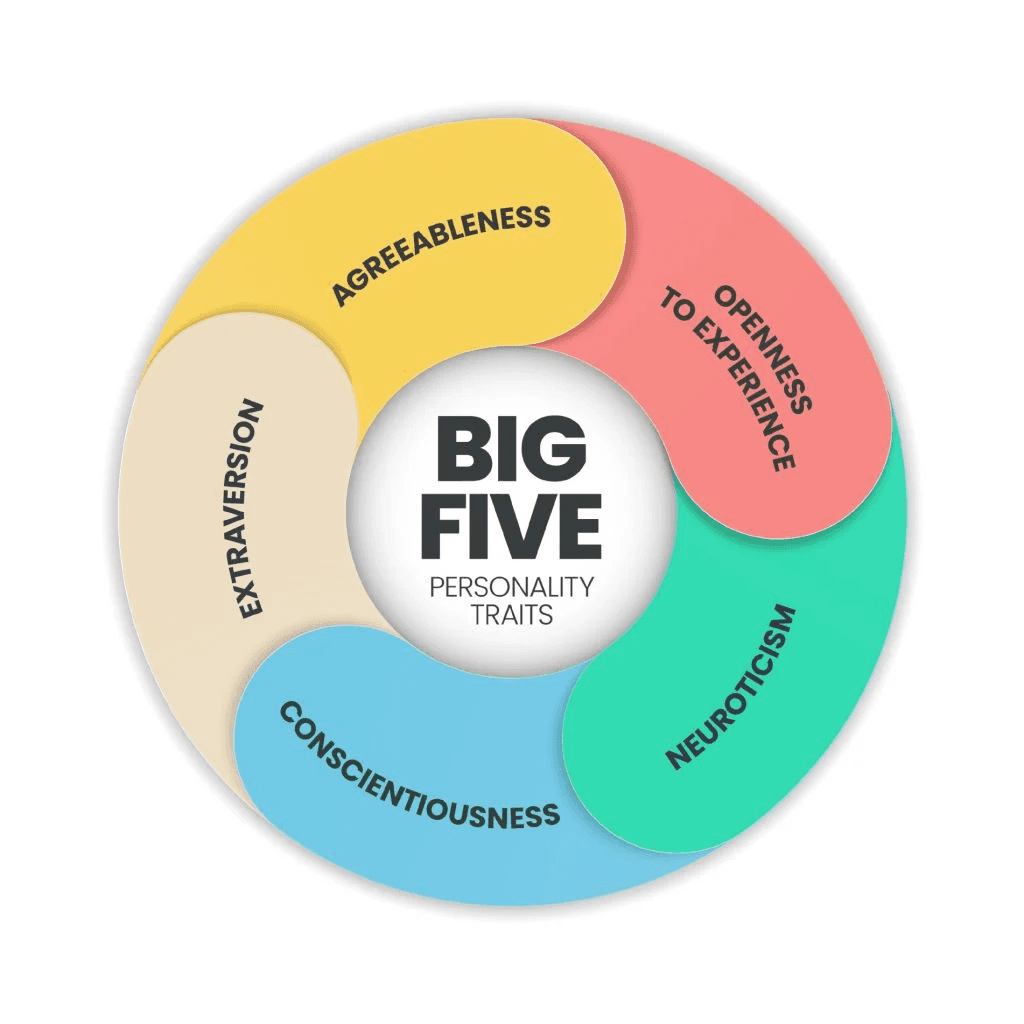
The Big Five Personality Traits
The Problem
In Joyntly, the assessment is only the starting point. The real test is what happens right after someone sees their results.
Do they know what to do next, and does the experience help them stick with it long enough to actually improve?
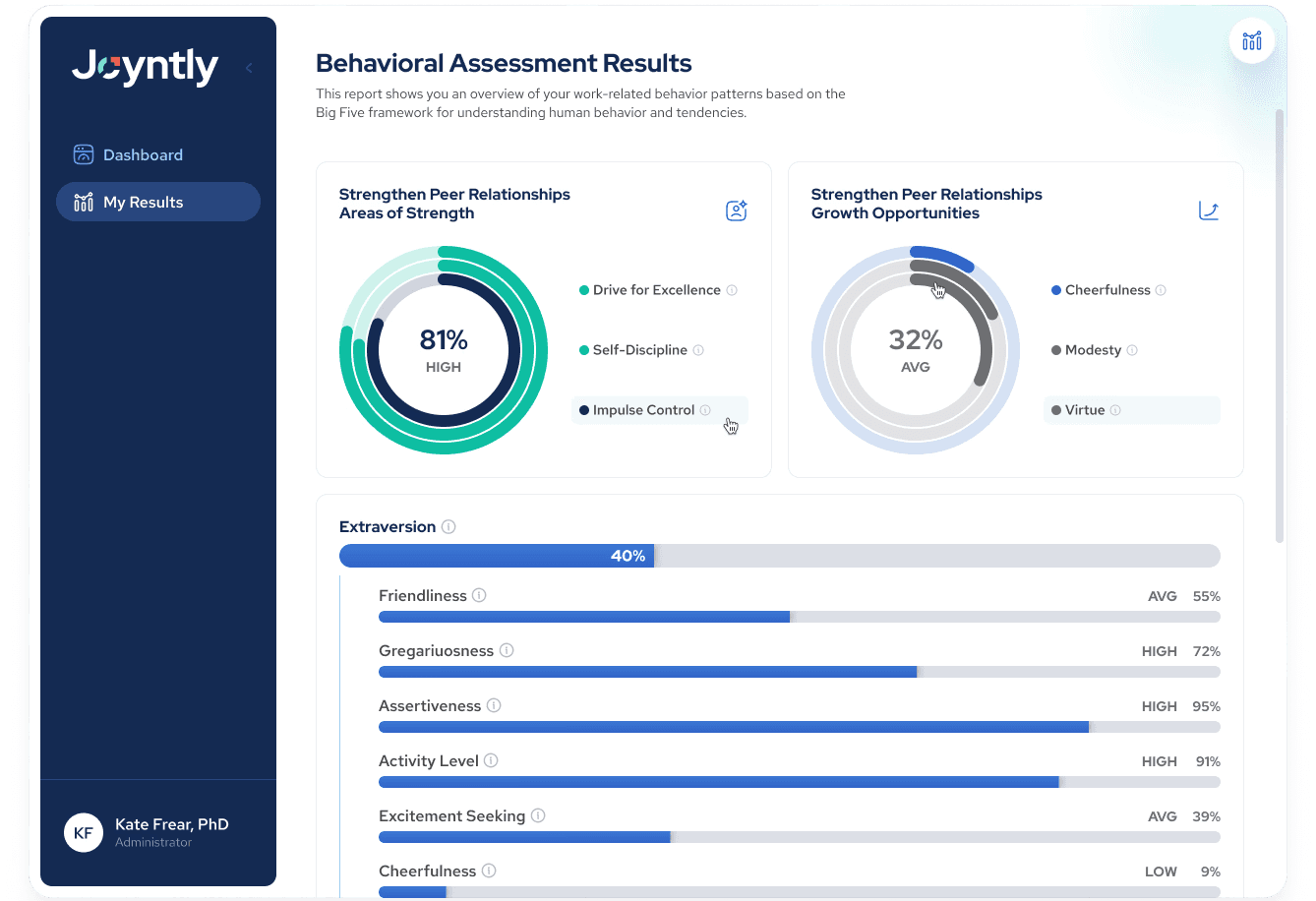
Results post assessment
In the original experience, users would pick a weekly exercise, log reps, and build a streak. On paper, it sounds motivating. And honestly, the weekly bite-sized exercises were a good idea. They made development feel approachable, even for busy employees.
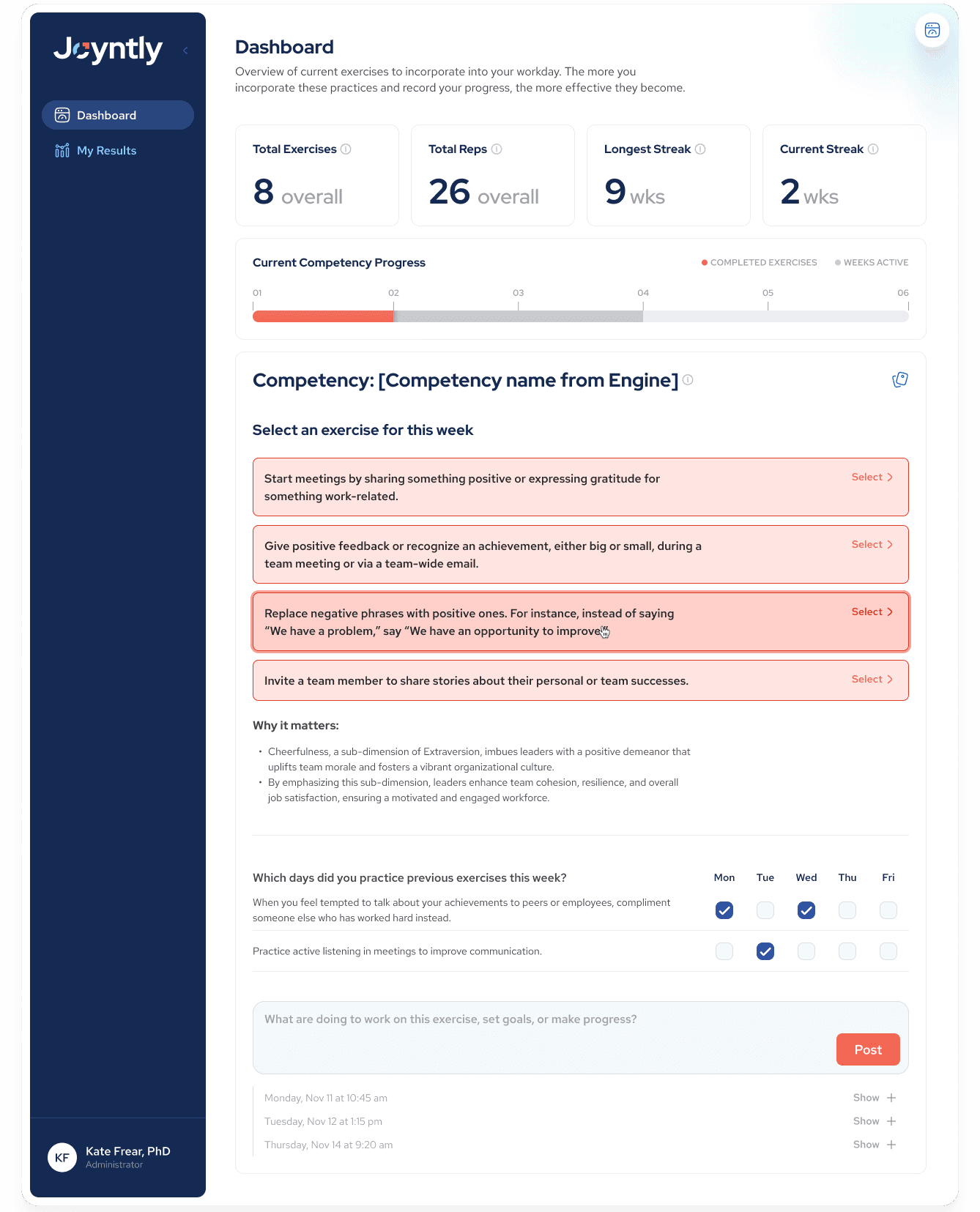
Old dashboard for completing weekly exercises
The Breakdown
The friction showed up when users had to commit. Choosing an exercise and translating it into a concrete plan took effort, and the streak mechanic added pressure in a way that did not always support re-engagement.
Redesign Plan
Help people move from results to real progress by:
Making the next step obvious
Reducing the effort to commit
Giving users a clearer sense of what they’re building over time
Context & Constraints
This work sits in the post-assessment part of the product. Users complete an assessment, review strengths and growth opportunities, and then move into ongoing development, where they practice skills over time. It needed to work for both everyday employees and people managers, so the tone and structure had to stay practical and broadly relevant across roles.
35
days
Goals & Success Metrics
We anchored the redesign around three goals:
CLARITY
Make the next step after results feel obvious, so users move from insight to action without hesitation.
COHESION
Make progress feel like a plan that builds over time, not a set of disconnected tasks.
REINFORCEMENT
Support behavior change in the real world through reflection and reinforcement with managers, mentors, and peers.
These were the metrics we tracked while iterating on the redesign
Measuring completion and the steps it takes
Baseline
Before the redesign, development after the assessment was structured around exercises, reps, and streaks. The system encouraged consistency and gave people something to do each week, but it often asked users to manage the experience themselves. Progress was framed as staying active inside the product, rather than building a clearly defined skill over time. As a result, effort and intention didn’t always line up, especially once the flow became more detailed and reflective.
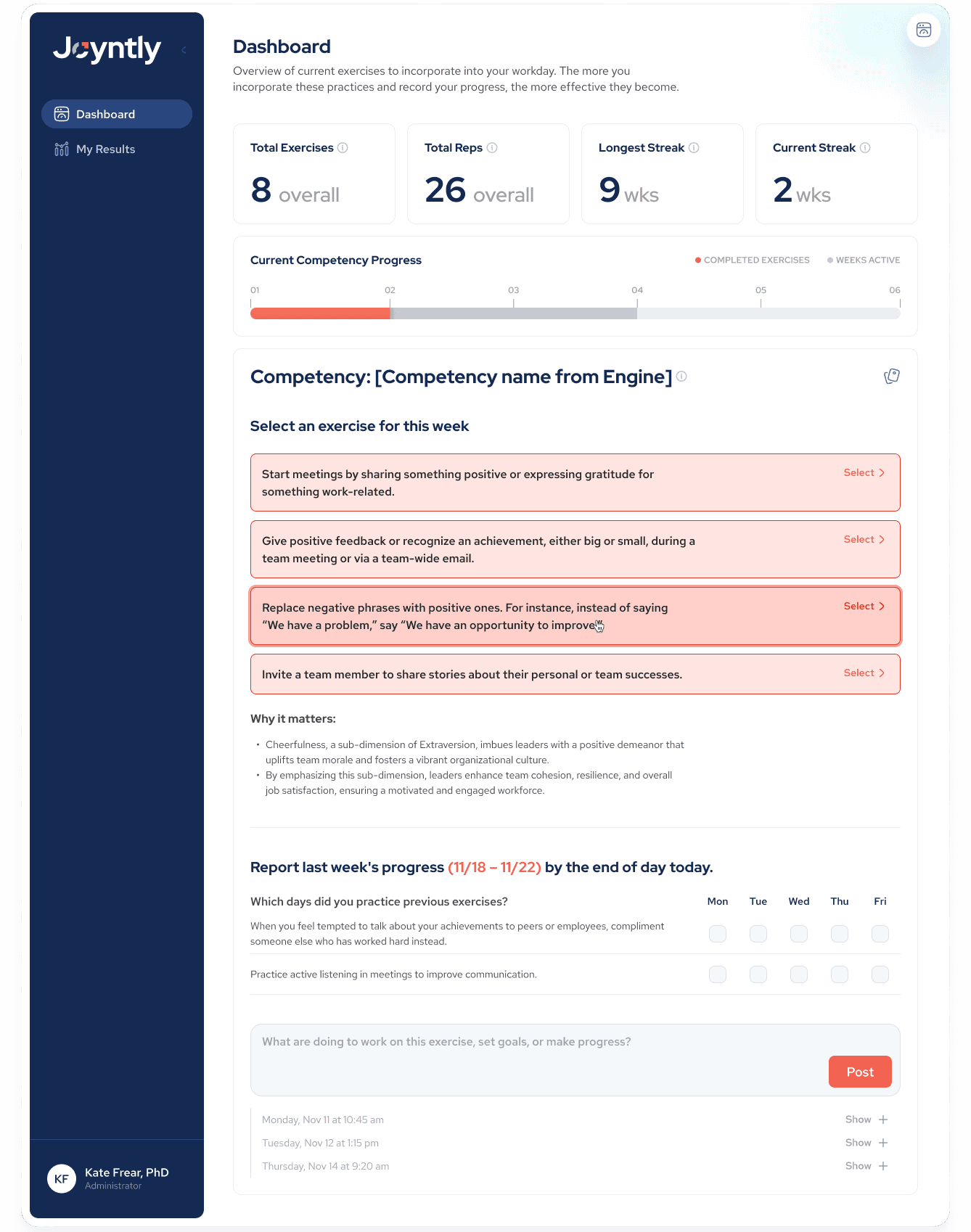
Default page state for reps for exercises
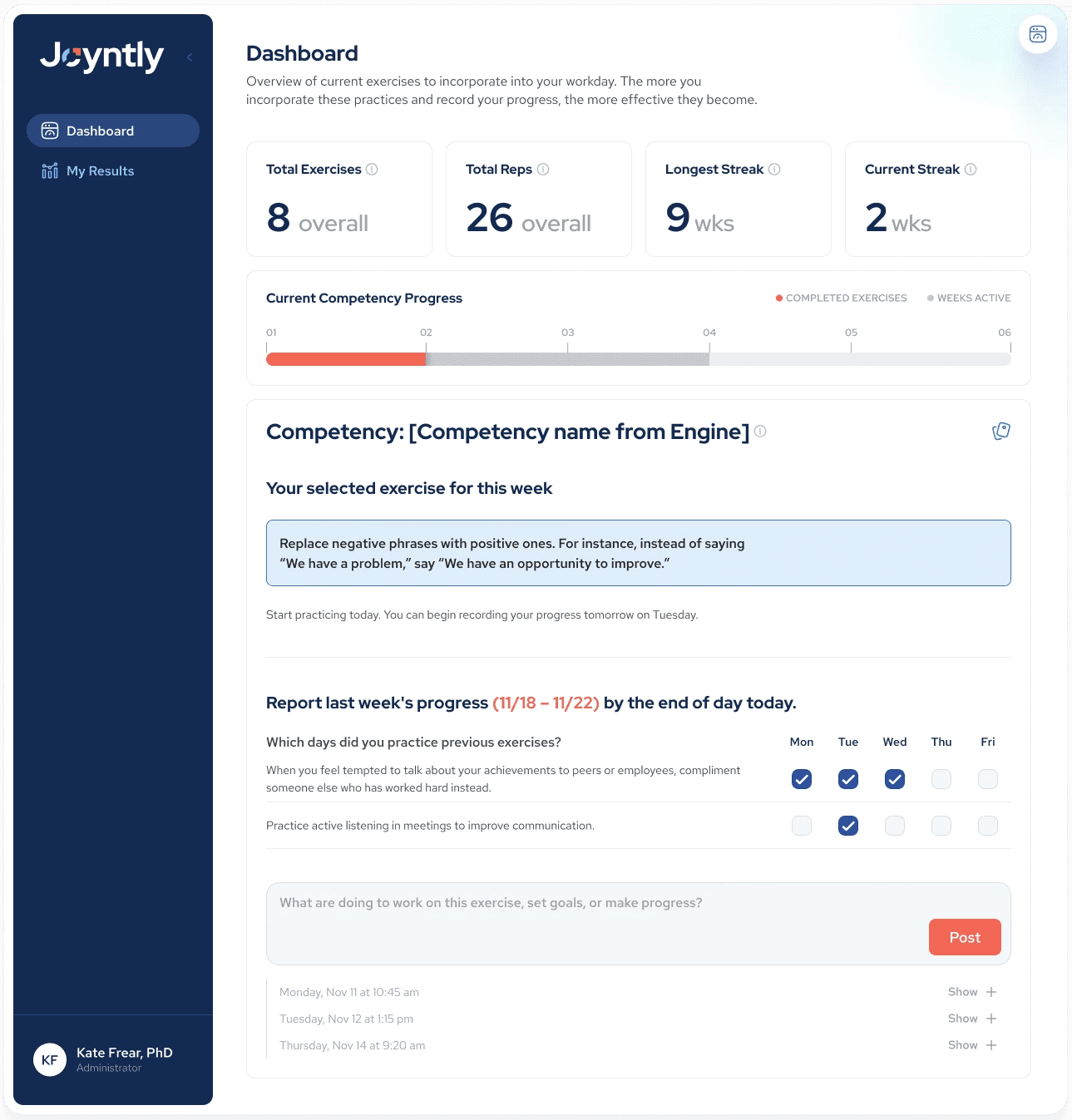
Selected page state for reps for exercises
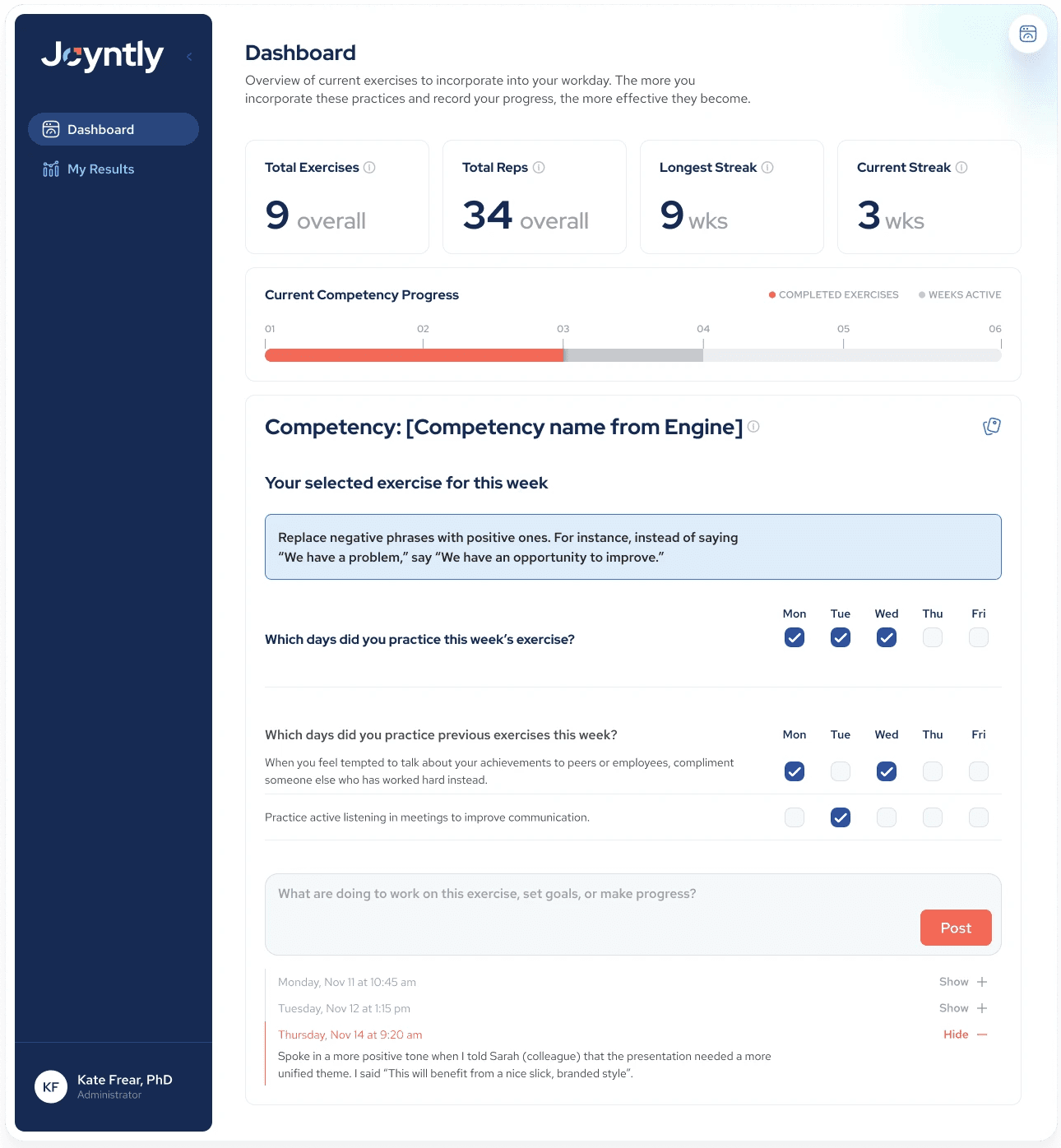
Goal Saved/Posted state with previous and this week's exercises
It wasn’t always obvious which specific skill a user was building from their results.
Some sections asked users to review or log past activity in ways that were hard to interpret, such as reflecting on previous weeks while acting in the current one.
Friction without payoff
Tracking reps and streaks added effort, without consistently translating into visible progress at work.
Missing time or breaking a streak made it harder to pick back up confidently.
Solution
At the heart of the redesign was a shift in mental model. The redesign moves the experience toward a guided, goal-oriented development mental model, where the product takes on more responsibility for helping users understand what they’re building, why it matters, and how each step connects over time.
Streak-based habit-tracking
Action Plan
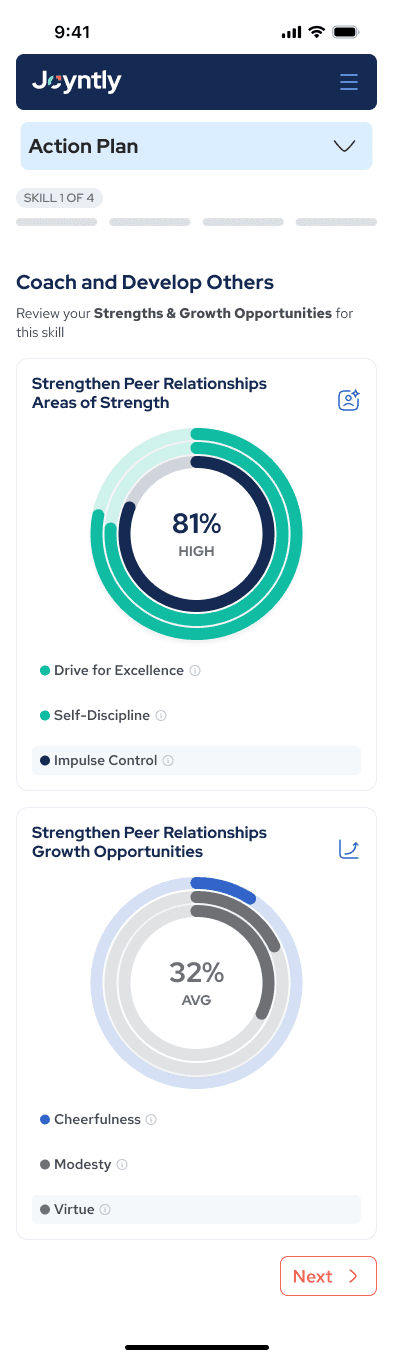
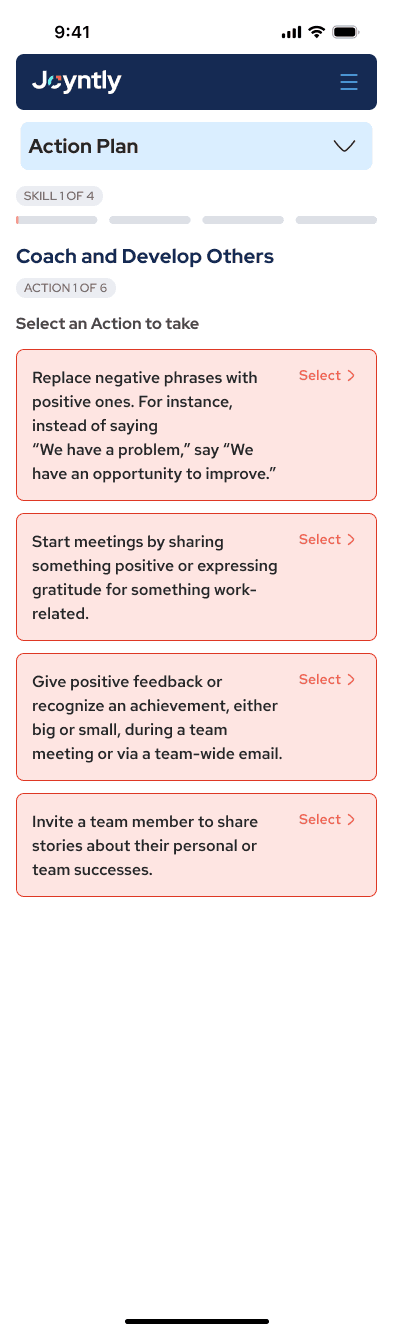
Right after the questionnaire, users land on the dashboard and immediately see a new sidebar that lays out a structured path. Each skill is broken into ~6 actions, and it ends with a reflection meeting prompt with their manager. For every action, users pick one exercise from four options.
1.
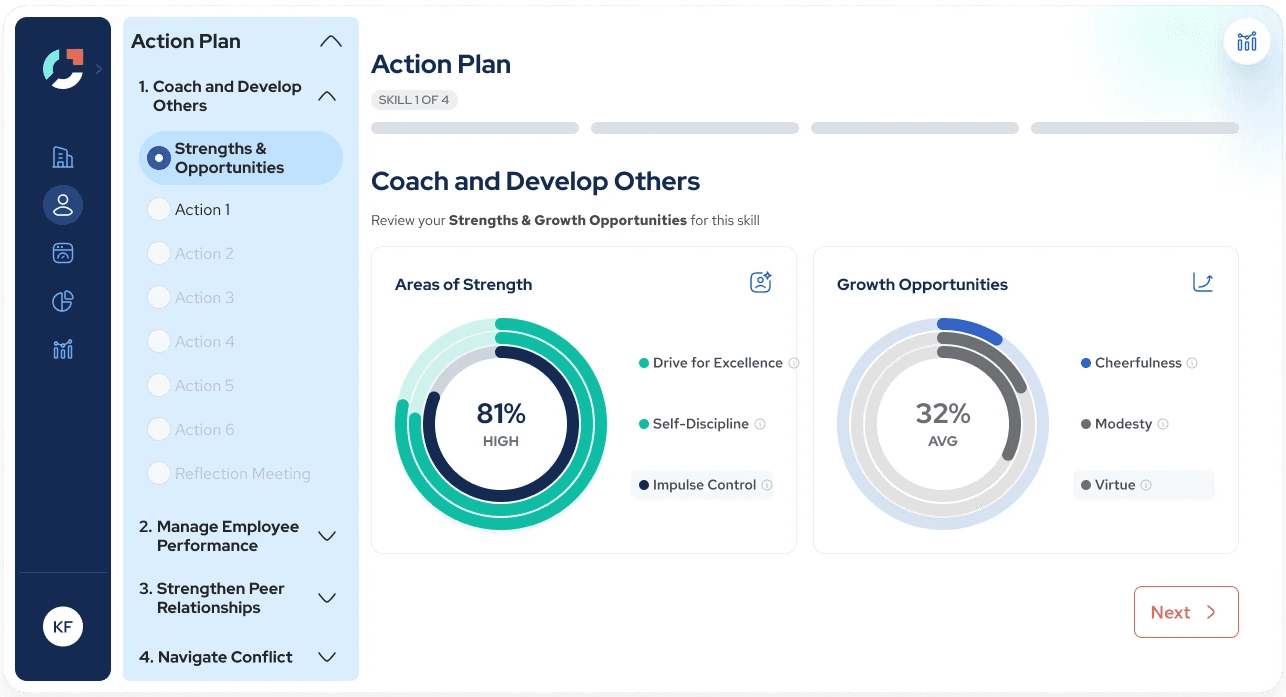
Dashboard
2.
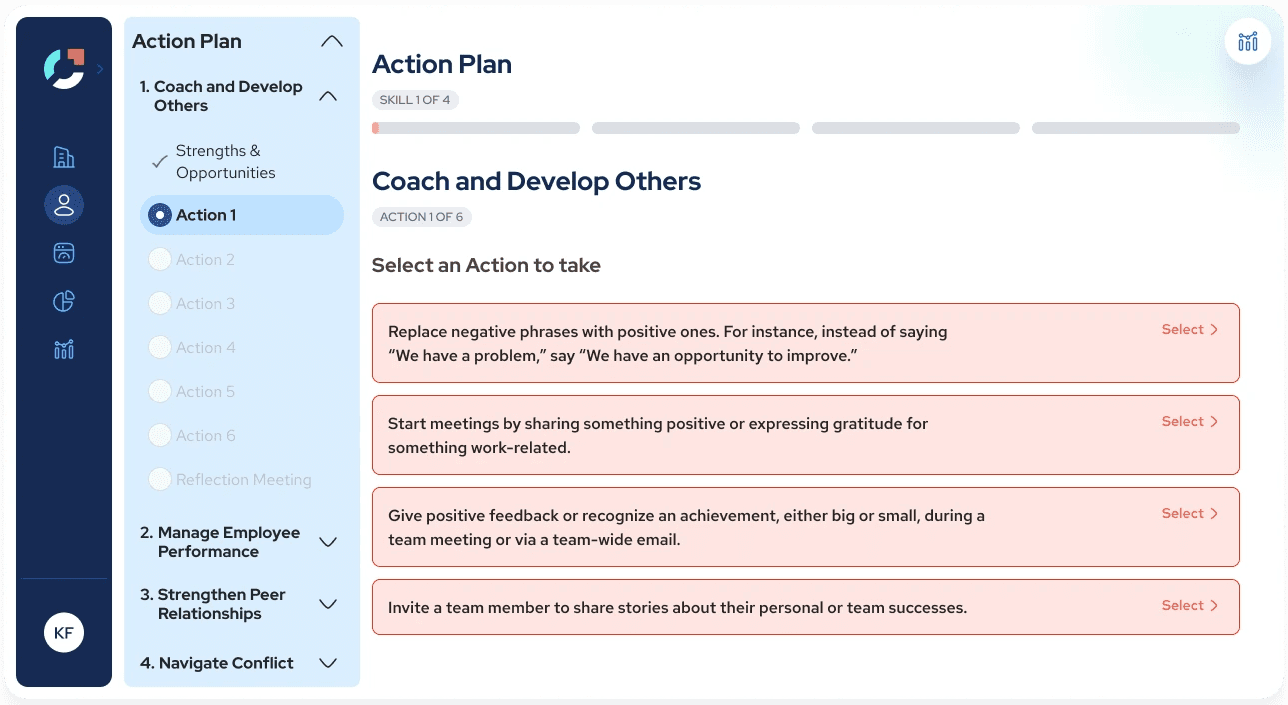
Action Selection
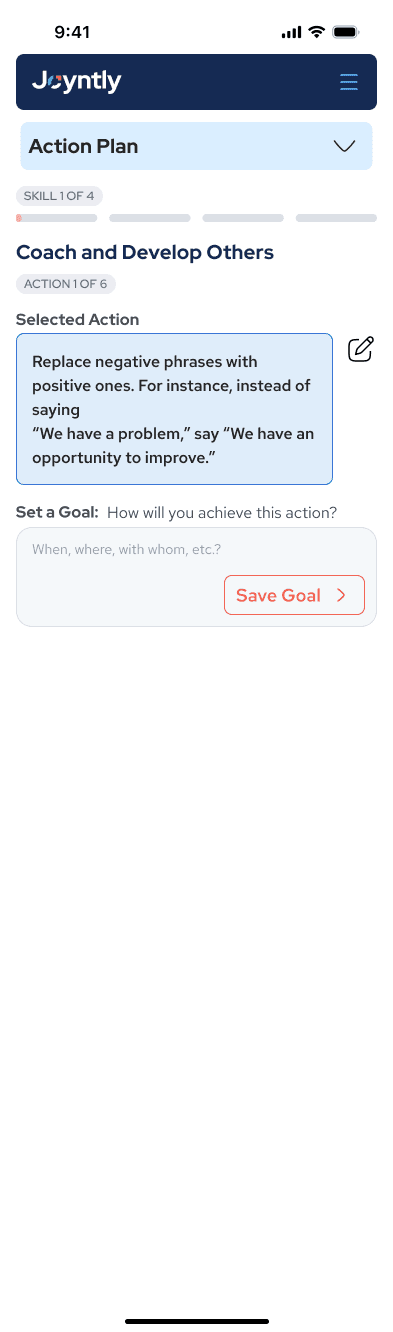
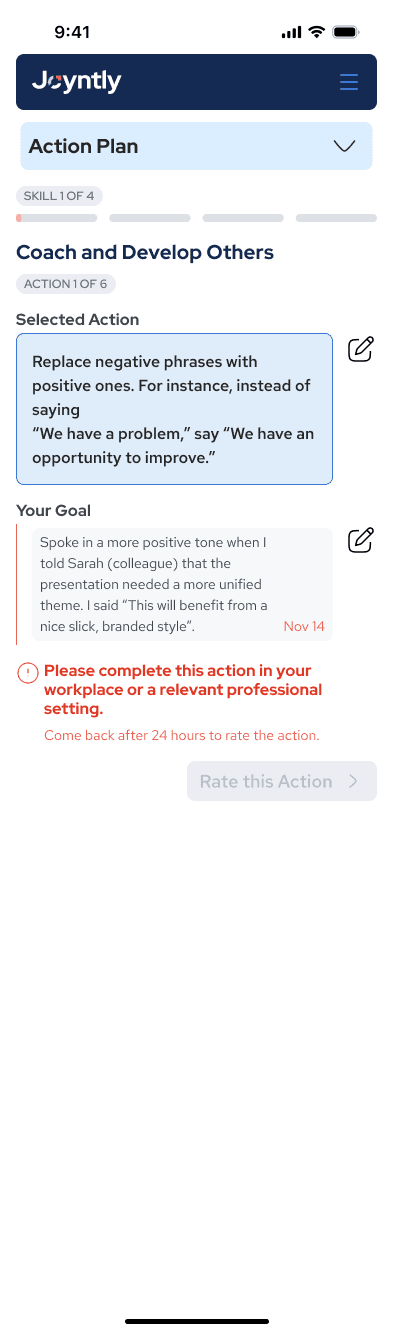
Once an exercise is chosen, the flow moves into goal setting for that action. Users set where and how they’ll apply it at work, then the plan intentionally pauses for 24 hours before they can continue so they actually try it in the real world at their workplace.
3.
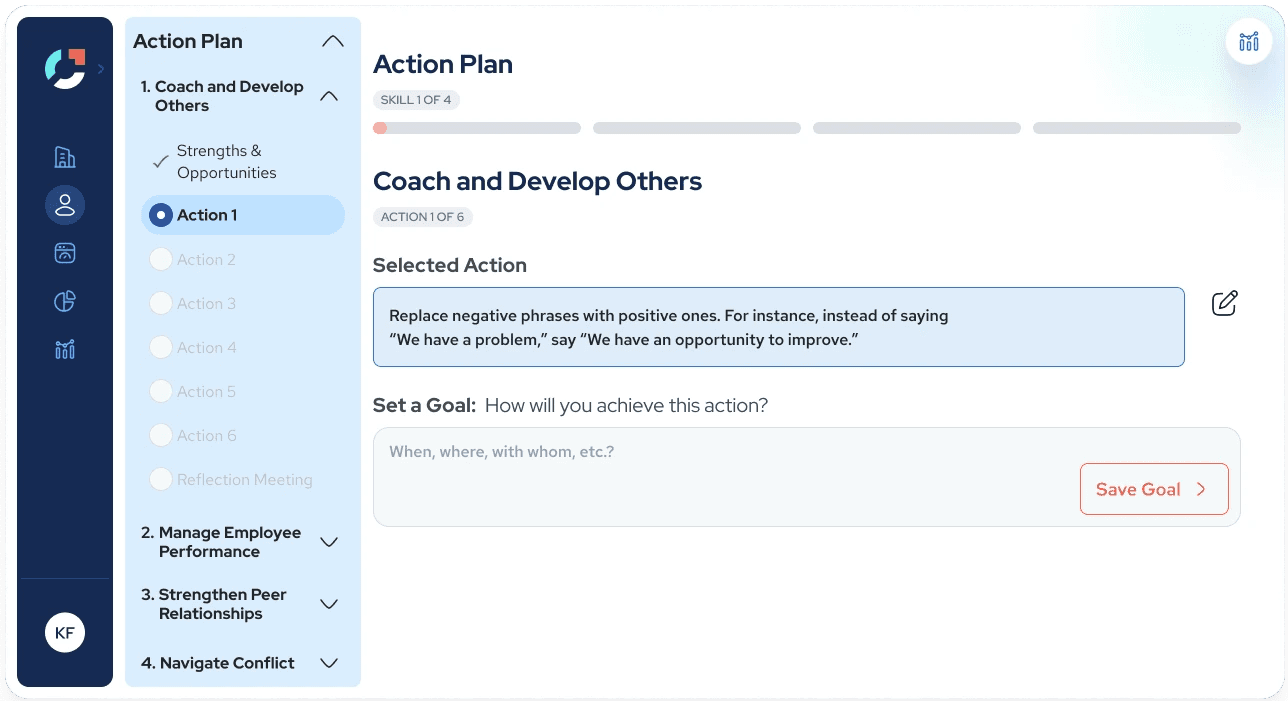
Setting a Goal
4.
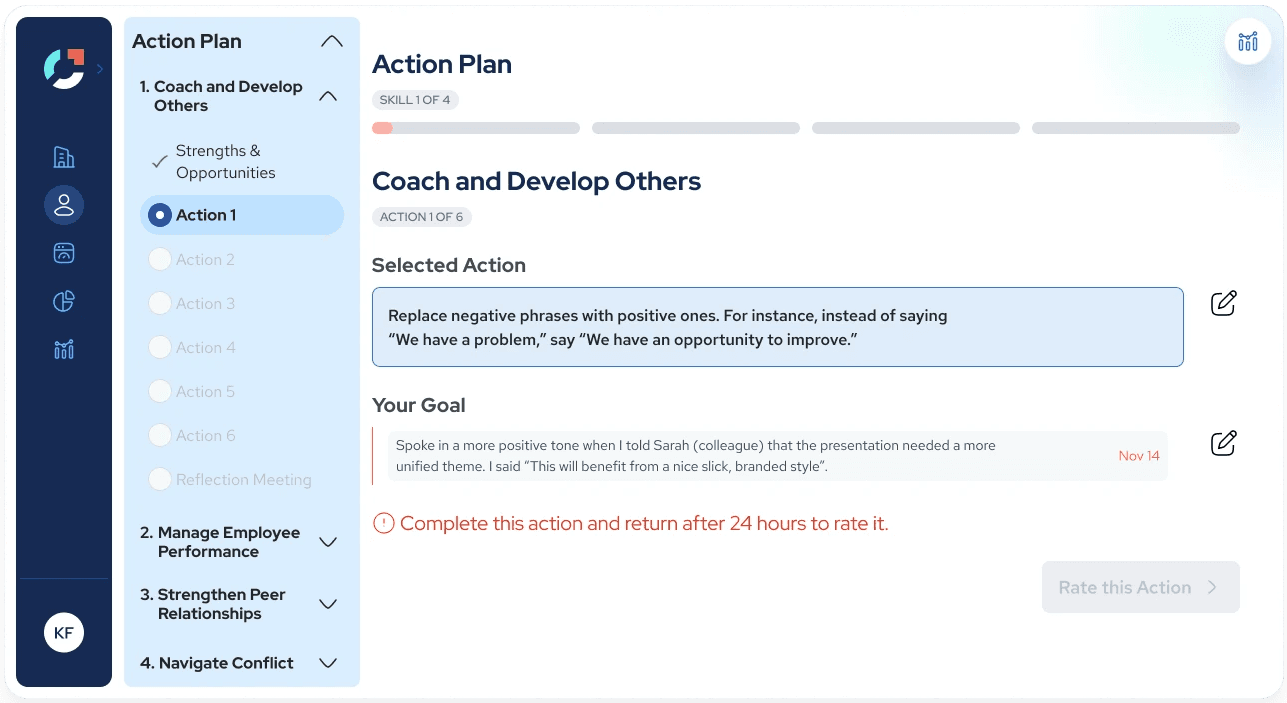
24hr pause
After the 24 hours, users can come back to close the loop with a quick reflection: a star rating plus notes on how it went and what they’d adjust next time.
5.
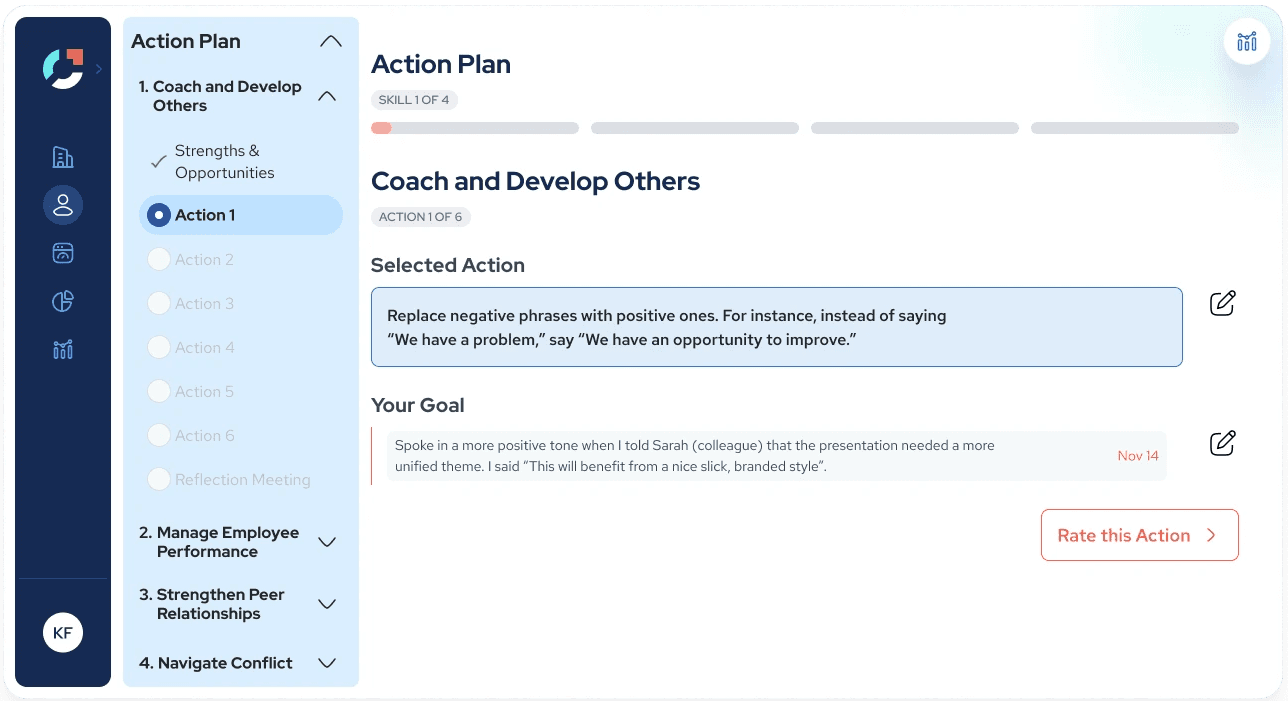
Action available to rate
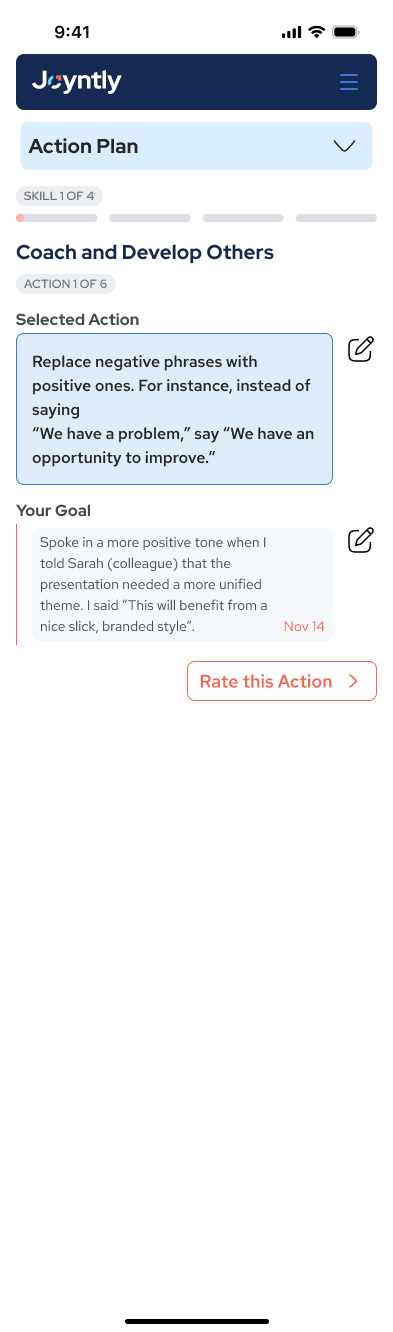
6.
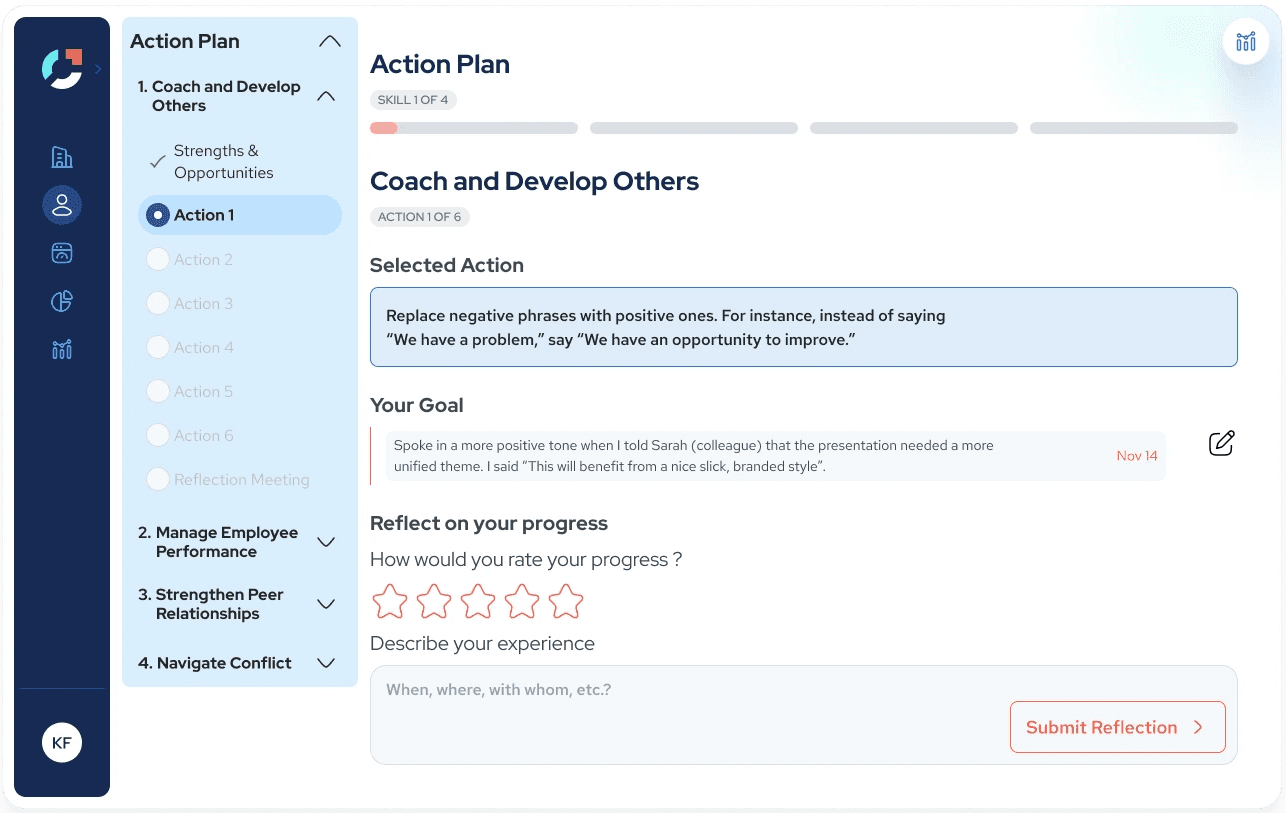
Rating page (default)
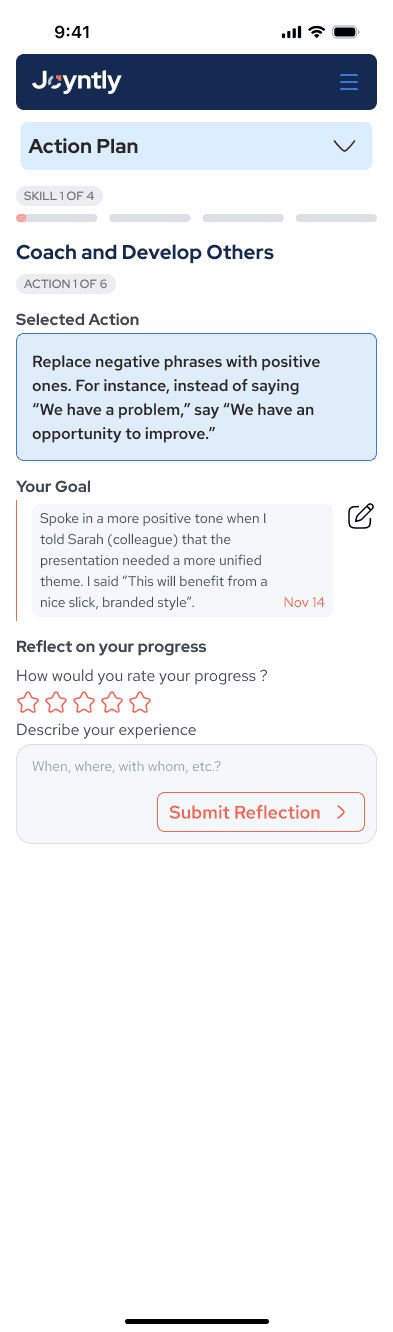
7.
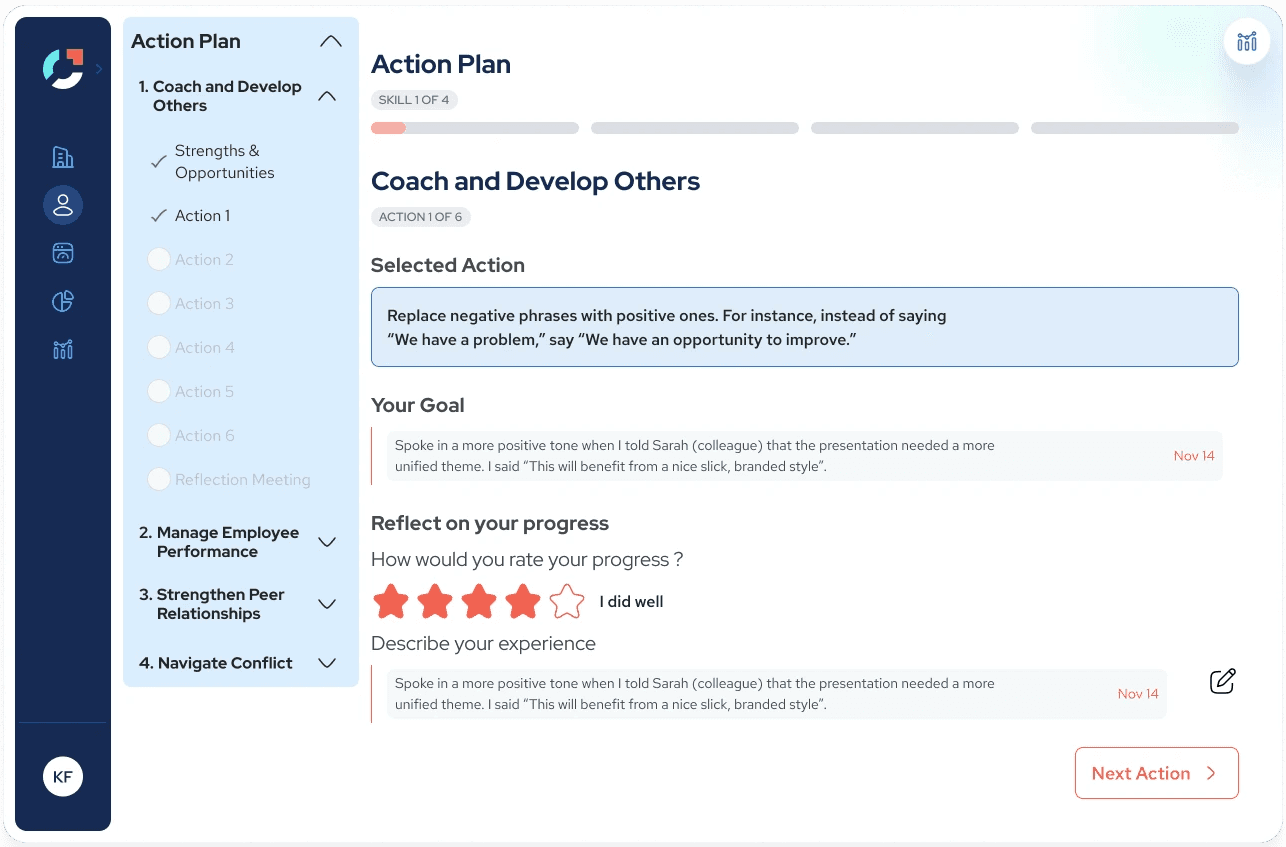
Rating page (filled)
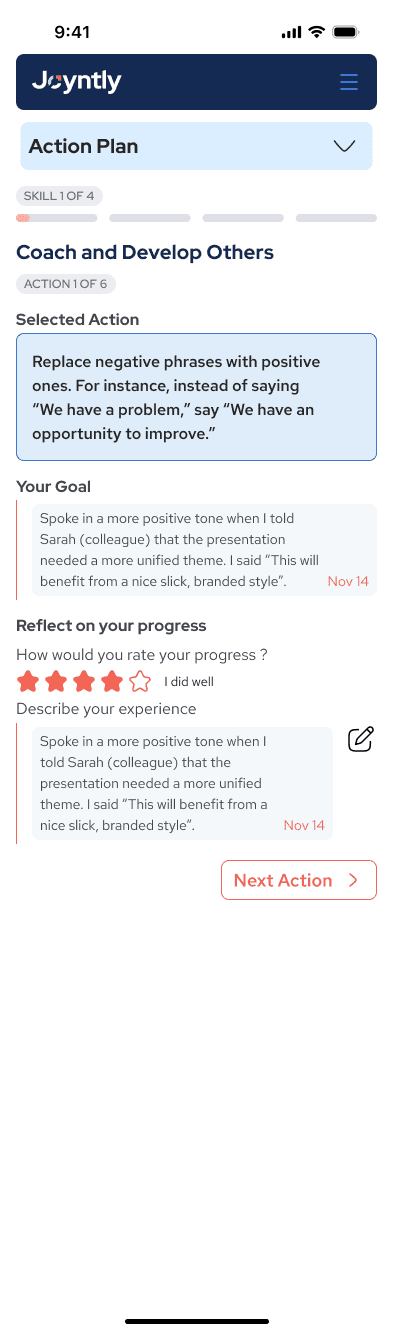
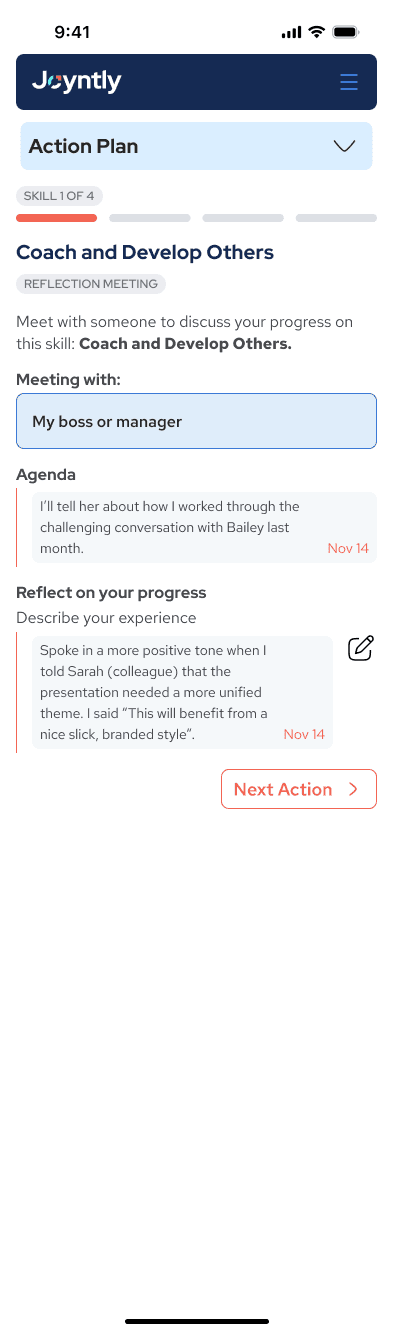
Reflection Meeting
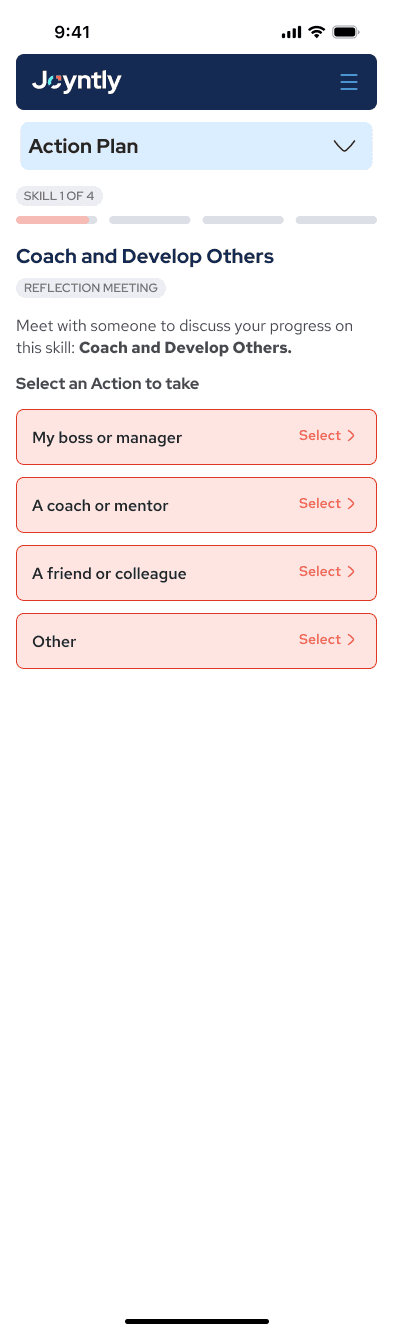
At the end of each skill, users take part in a reflection meeting with their manager, mentors, or coworkers to talk through how the experience felt and how their progress is shaping up.
1.
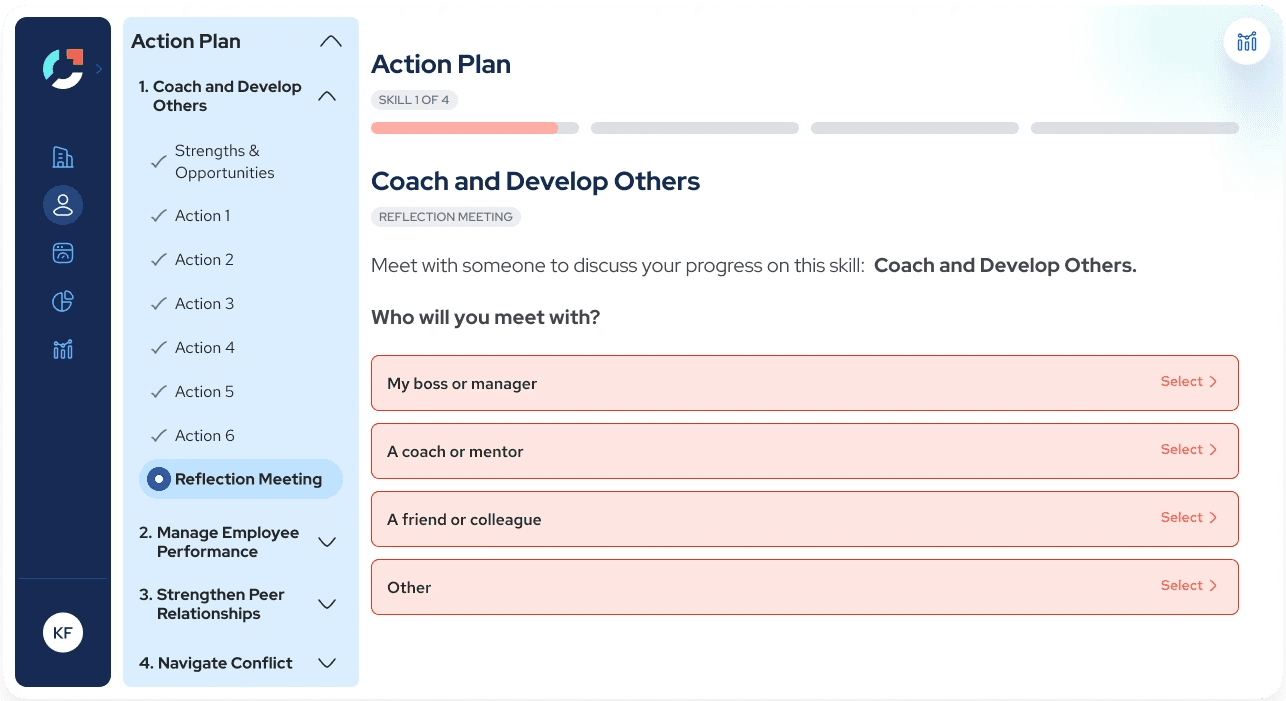
Select co-workers
2.
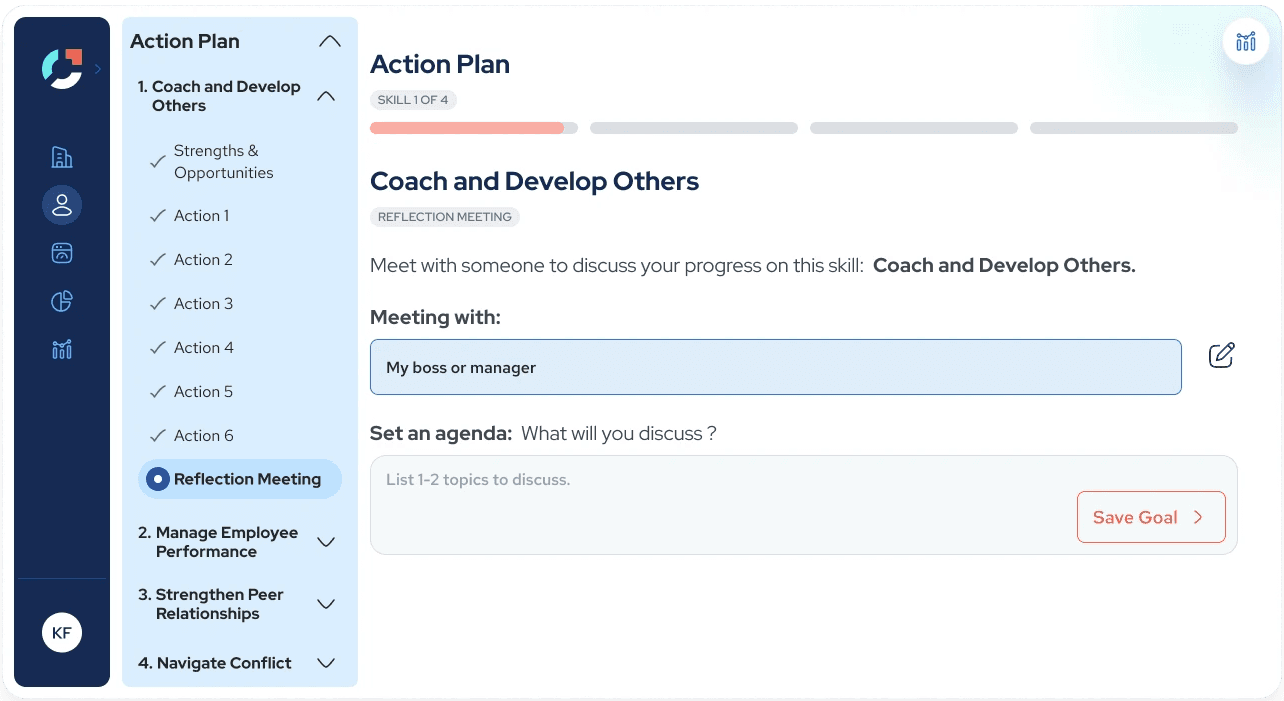
Set an Agenda
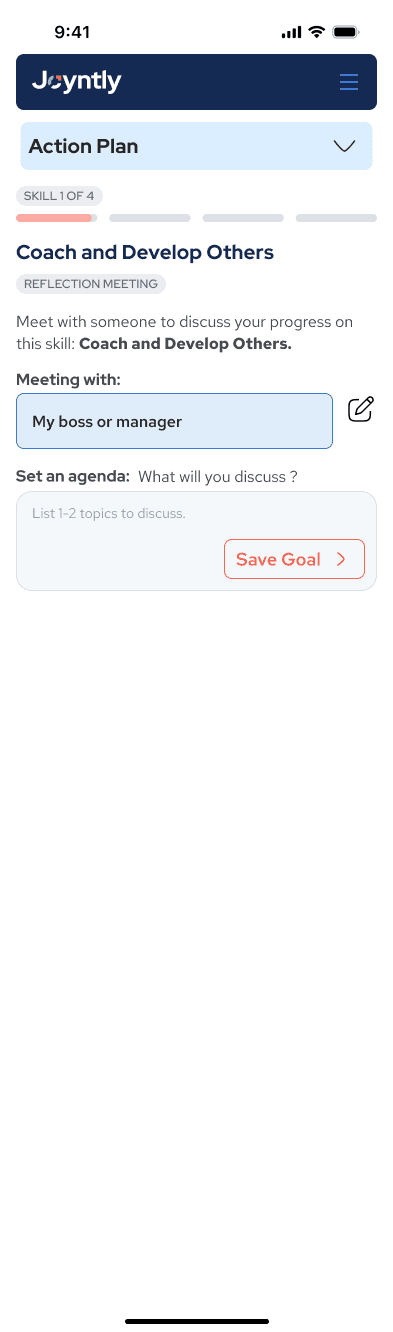
3.
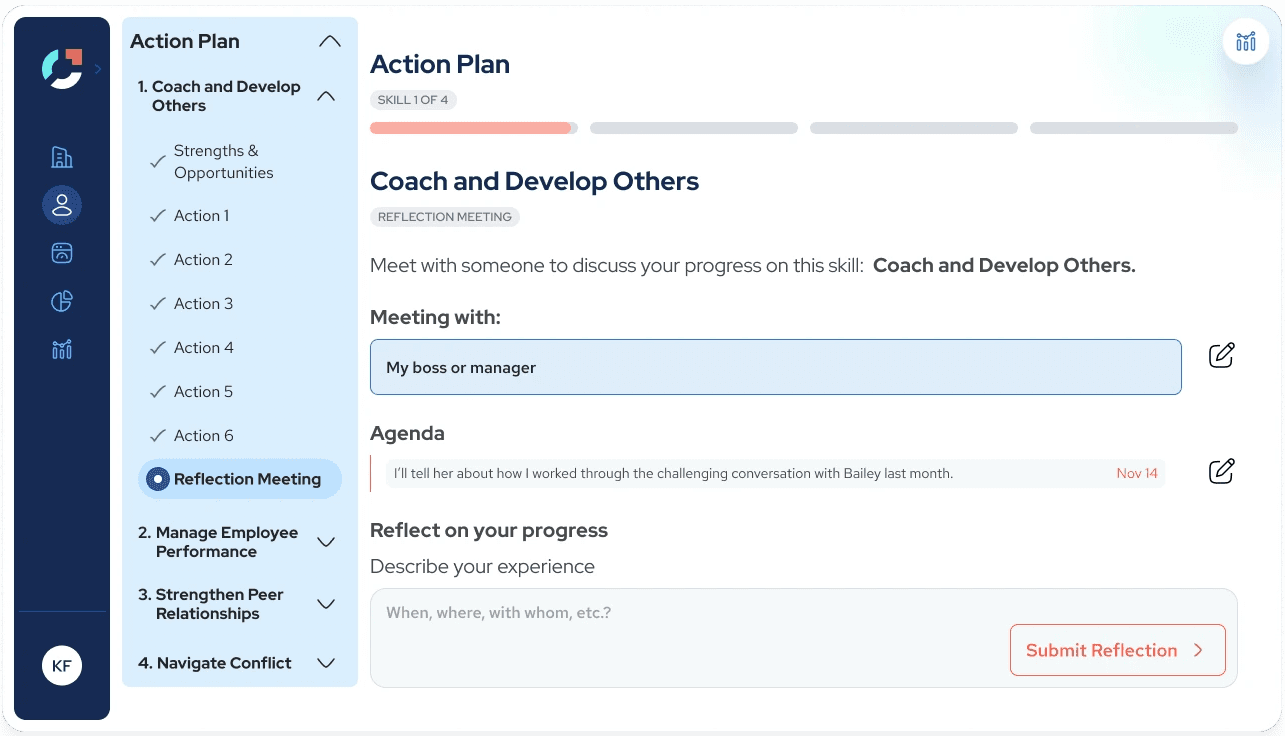
Reflection page (default)
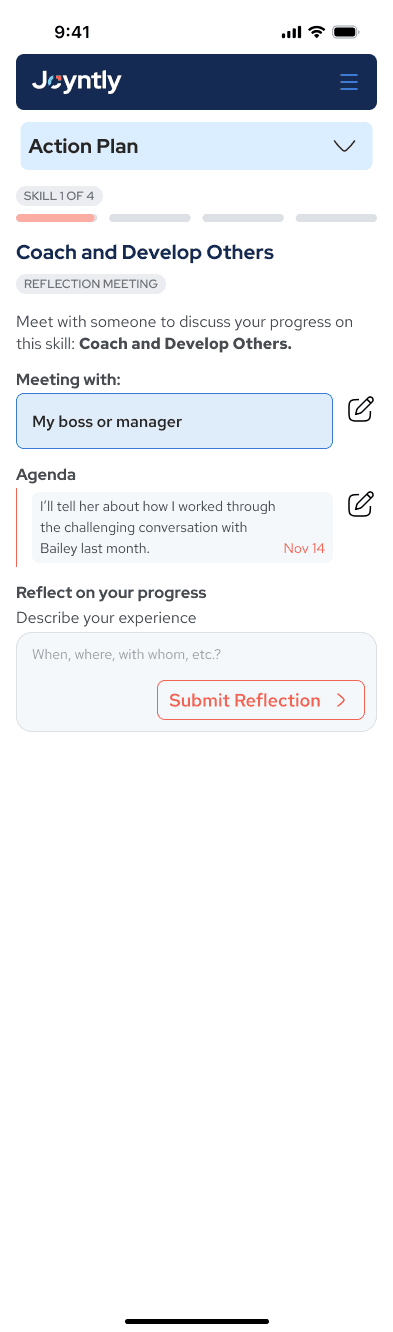
4.
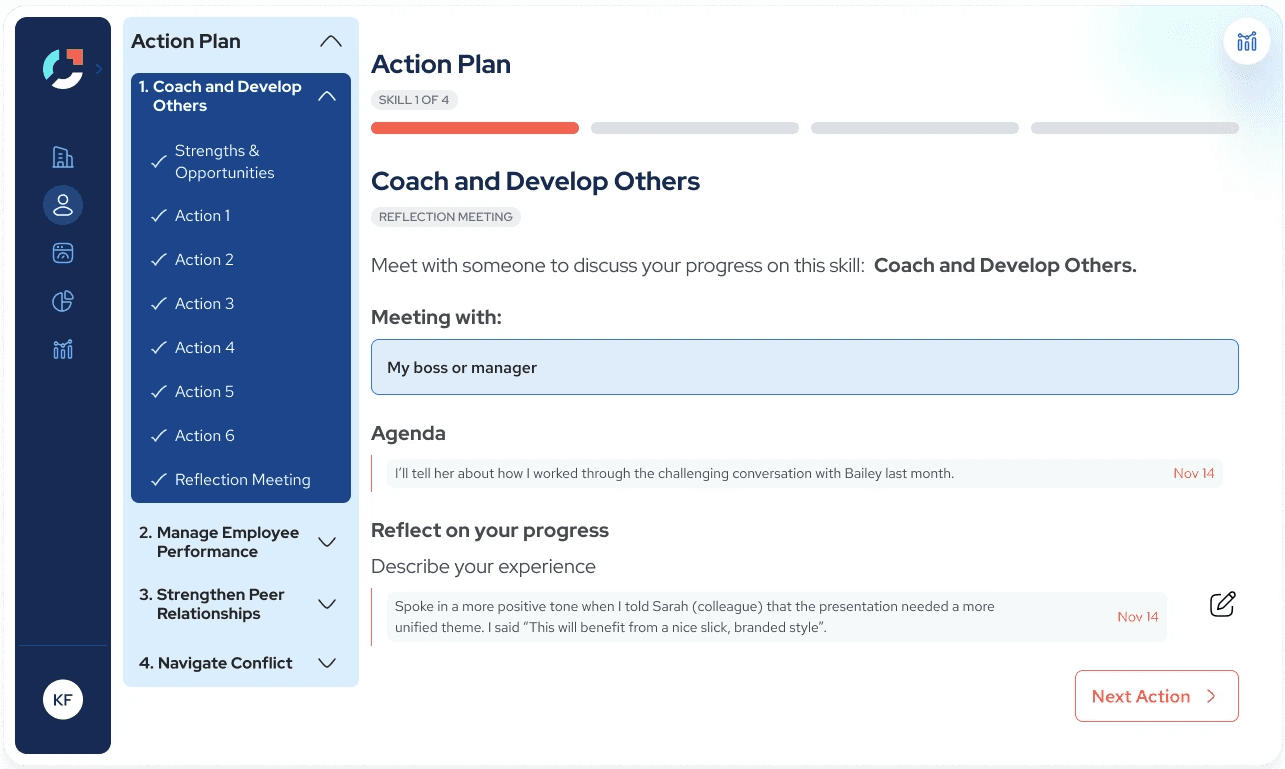
Reflection page (filled)
Outcomes
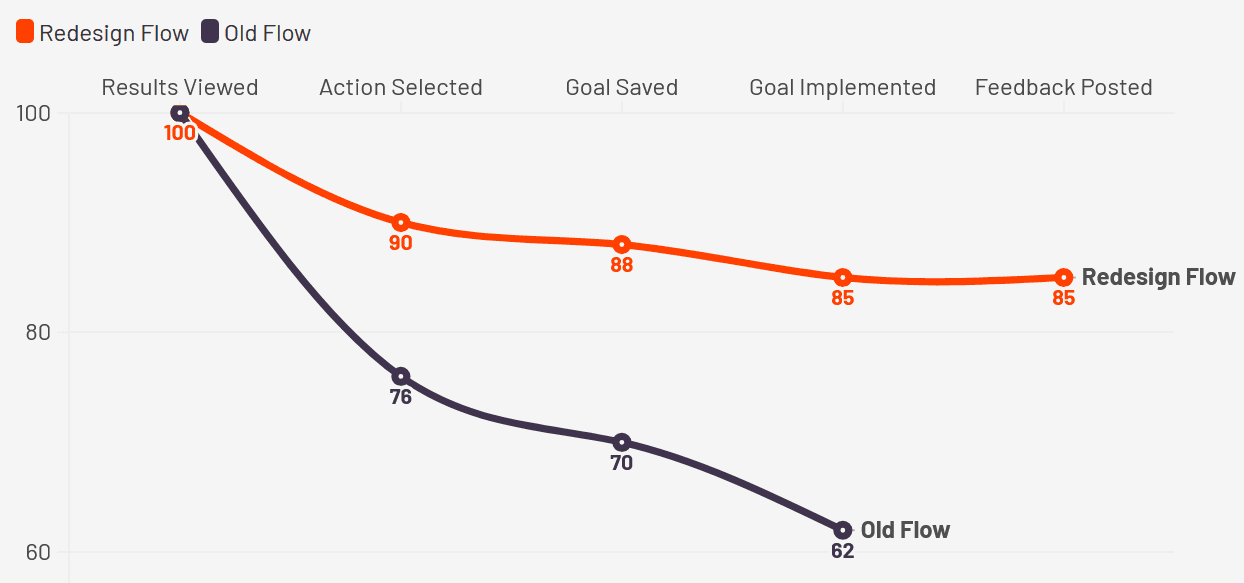
Funnel Conversion
Goal Saved
+18%
Dashboard
Task Success
65%
92%
SUS Score
78%
85%
Other Prototypes
Error States
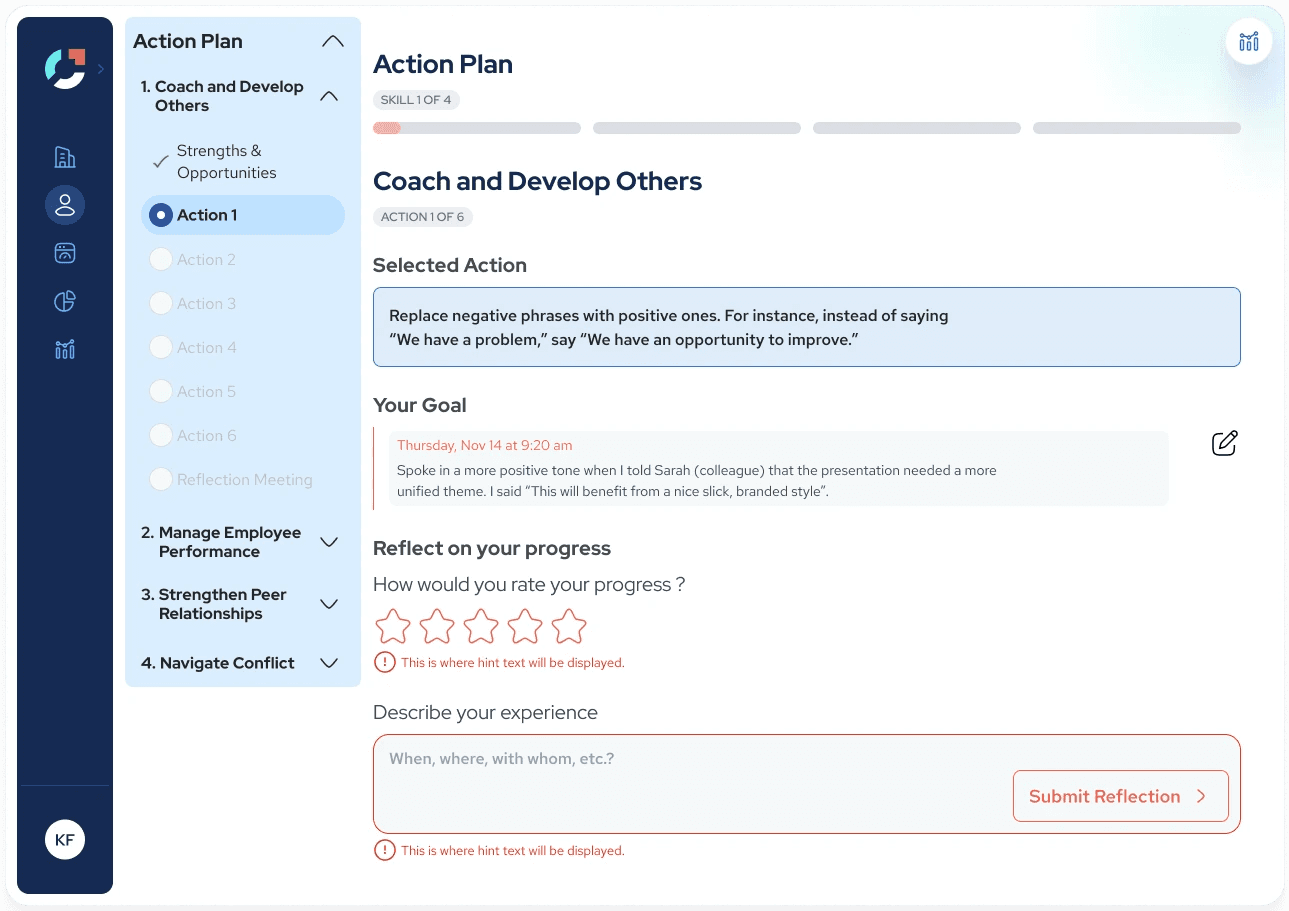
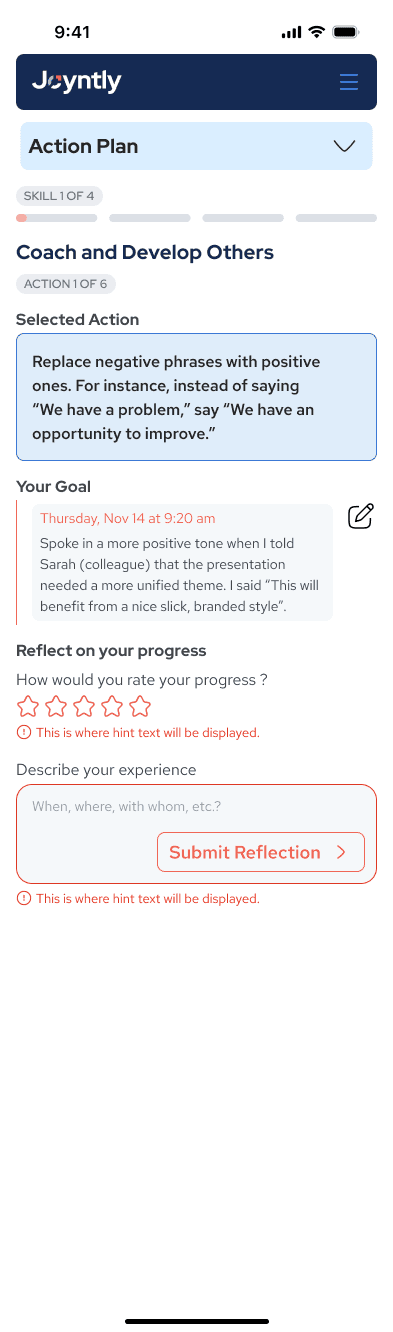
Error state for Star rating and feedback
End of Action Plan
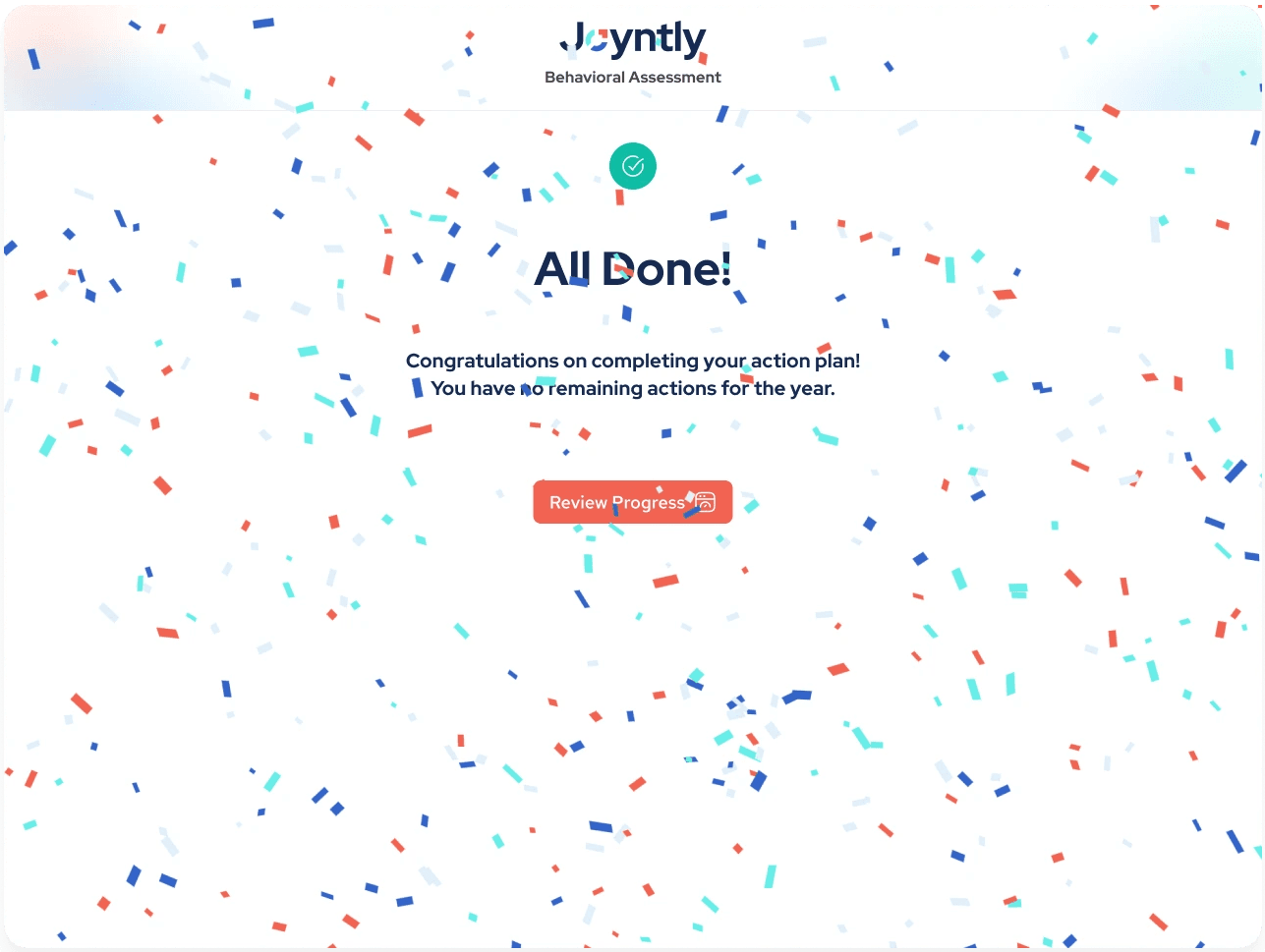
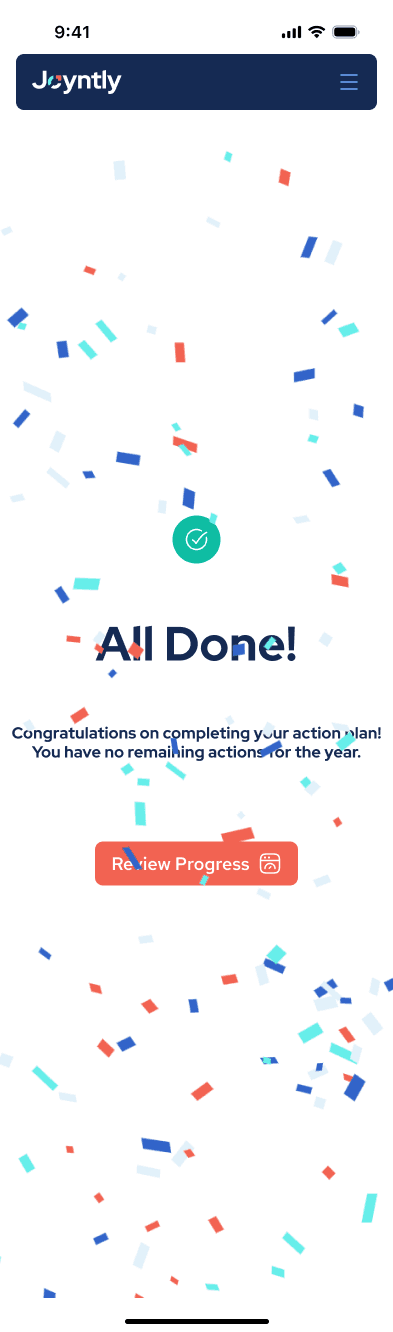
End State
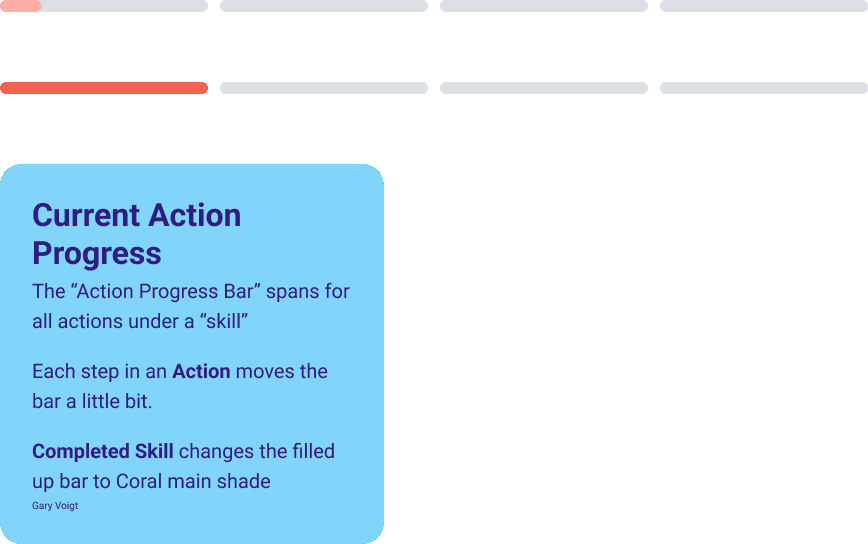
Progress Bar Behavior